

Lutein, Zeaxanthin, and Astaxanthin: How Eye Carotenoids Differ
Lutein, zeaxanthin, and astaxanthin are often grouped as “eye antioxidants,” but they are not interchangeable drops of the same ingredient.
All three are xanthophyll carotenoids—fat-soluble plant or microbial pigments containing oxygen. Their structures differ, which changes how they are absorbed, transported, and positioned in tissues. Lutein and zeaxanthin have a clear anatomical connection to the macula. Astaxanthin has interesting experimental research, but far less evidence for clinical eye outcomes.
Lutein and zeaxanthin live in macular pigment
The macula selectively concentrates lutein, zeaxanthin, and meso-zeaxanthin. Together they form macular pigment, with the highest density near the center of the fovea.
Macular pigment absorbs some short-wavelength visible light before it reaches photoreceptors and may reduce oxidative stress in this high-metabolism tissue. Zeaxanthin and meso-zeaxanthin are more concentrated toward the central macula; lutein is distributed more broadly.
The body cannot make lutein or zeaxanthin from scratch. It obtains them from food or supplements. Meso-zeaxanthin can be formed in the retina from lutein.
Astaxanthin is related, but different
Astaxanthin is the red-orange pigment made by certain microalgae and accumulated by salmon, trout, shrimp, and krill. Its molecular structure spans cell membranes in a way that has attracted antioxidant research.
Laboratory and small human studies have examined astaxanthin for eye fatigue, focusing, tear function, and blood flow. Results are intriguing but not strong enough to treat astaxanthin as an established therapy for AMD, dry eye disease, or digital eye strain.
Astaxanthin is not part of the AREDS2 formula. Adding it to a product does not turn that formula into a clinically tested AMD intervention.
Food sources have different strengths
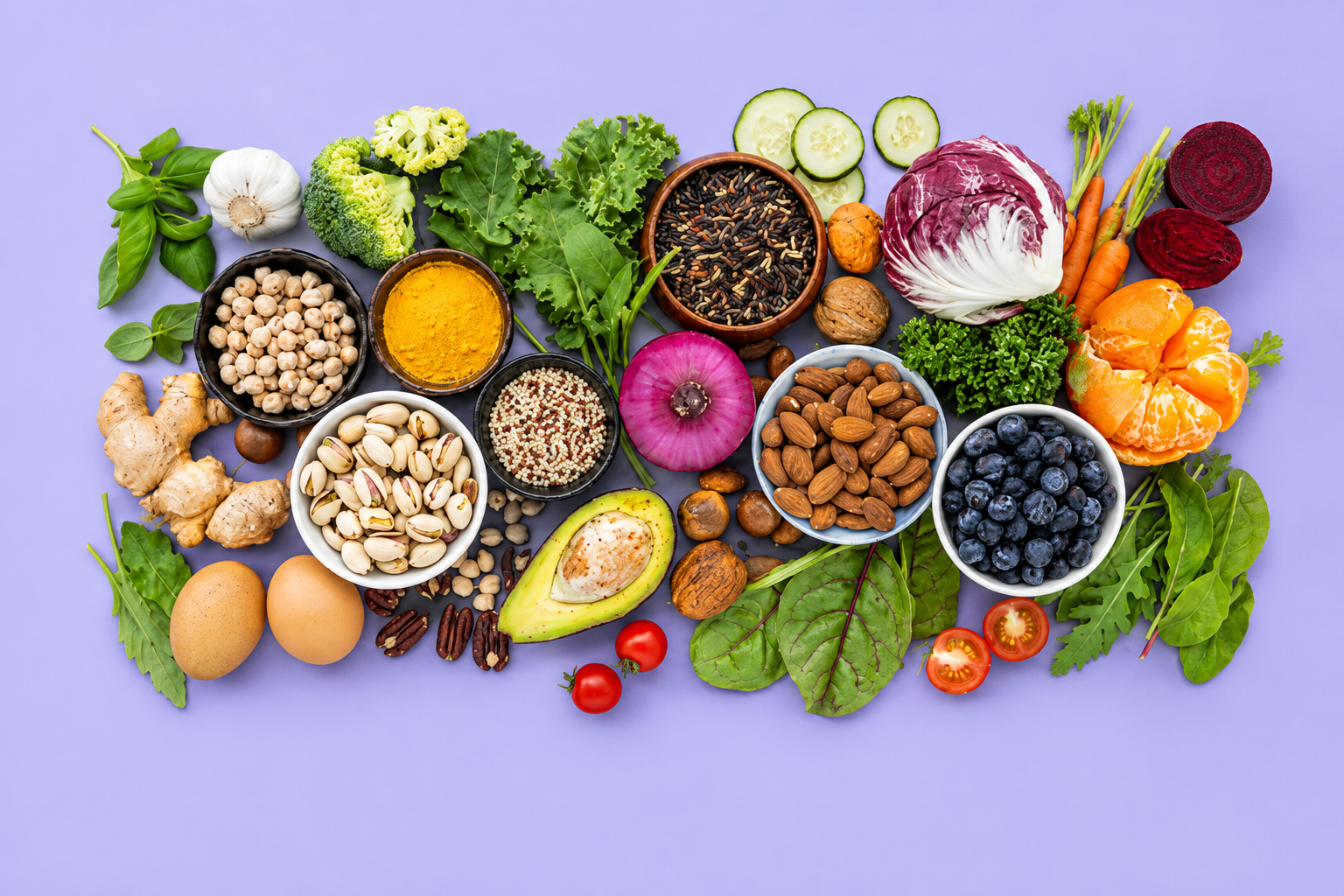
Lutein-rich foods include kale, spinach, collard greens, parsley, peas, pistachios, corn, and egg yolks. Zeaxanthin is found in orange and yellow peppers, corn, eggs, and some fruits.
Leafy greens may contain more lutein by weight, while egg yolk's fat matrix can make its carotenoids relatively bioavailable. Eating carotenoid-rich vegetables with olive oil, nuts, avocado, eggs, or another fat source can improve absorption.
Astaxanthin comes mainly from salmon and other pink-red seafood or from microalgae-derived supplements.
What the evidence can and cannot say
AREDS2 showed that replacing beta-carotene with 10 milligrams lutein plus 2 milligrams zeaxanthin maintained the formula's benefit while avoiding beta-carotene's smoking-related lung-cancer concern. The overall AREDS2 formula reduced progression in people with intermediate AMD or late AMD in one eye.
That does not mean lutein and zeaxanthin alone prevent AMD in healthy people. The trial studied a complete high-dose combination in a defined disease population.
Macular pigment optical density can rise with carotenoid intake in some people, but a biomarker change is not identical to better reading vision or prevention of disease. Baseline diet, genetics, smoking, body composition, absorption, and existing eye disease all influence response.
How Nutrovell combines them
Nutrovell Macular Complex supplies 10 milligrams lutein, 2 milligrams zeaxanthin, and 50 micrograms astaxanthin per two-softgel serving. It also includes EPA and DHA omega-3s, zinc, copper, vitamins C and E, and hyaluronic acid.
This combination brings several eye-relevant nutrients into one serving. It should be understood as a broad nutritional formula, not proof that the complete blend prevents or treats an eye disease.
Take the softgels with a main meal and water as directed. The meal is especially useful because carotenoids and omega-3 fatty acids are fat-soluble.
Who should check first
Anyone with diagnosed AMD should ask whether the exact AREDS2 formula is appropriate instead of substituting a general carotenoid product. People taking anticoagulants, those with fish allergies, and those combining several vitamin products should review the full label with a clinician or pharmacist.
Pregnancy, breastfeeding, planned surgery, and chronic liver or bleeding conditions also justify a check. Carotenoids from food are not the same exposure as concentrated multi-ingredient supplements.
Protecting vision is bigger than carotenoids
Do not smoke. Manage blood pressure, glucose, and cardiovascular risk. Wear appropriate ultraviolet protection. Eat a varied diet. Get regular comprehensive eye examinations, especially with age, diabetes, strong family history, or existing eye disease.
For screen discomfort, follow the 20-20-20 idea, blink fully, address glare, and have persistent dryness assessed. A pigment capsule cannot correct an outdated prescription, dry-eye inflammation, glaucoma, or retinal disease.
The bottom line
Lutein and zeaxanthin are structural components of macular pigment with well-established eye biology. Astaxanthin is a related carotenoid with promising but less mature human evidence.
Use the distinctions. A credible article should explain where each compound fits, not flatten all three into a claim that “antioxidants improve vision.”
Related Product

Featured in this article
Macular Complex
Omega-3, lutein, zeaxanthin and astaxanthin formula
View ProductReferences
- National Eye Institute. AREDS/AREDS2 Clinical Trials: Major Findings.
- National Institutes of Health, Office of Dietary Supplements. Carotenoids and Health.
- Bernstein PS et al. The Value of Measurement of Macular Carotenoid Pigment Optical Densities and Distributions in Age-Related Macular Degeneration and Other Retinal Disorders.
These statements have not been evaluated by the Food and Drug Administration. This product is not intended to diagnose, treat, cure, or prevent any disease.
Related Articles

AREDS2 Formula vs. General Eye Vitamins: What's the Difference?

Best Time to Take Cranberry Supplements—and What to Do When Symptoms Start
