

AREDS2 Formula vs. General Eye Vitamins: What's the Difference?
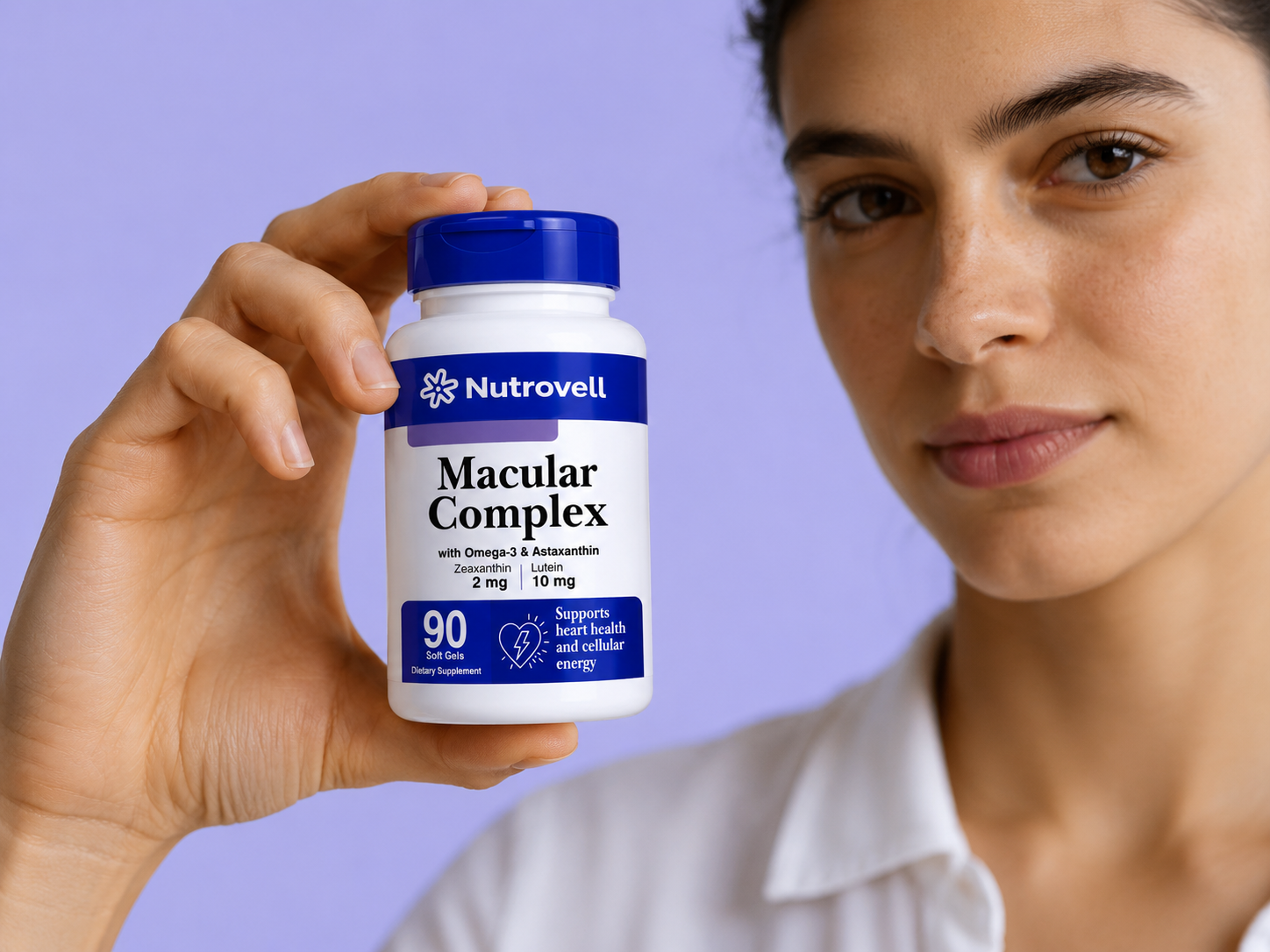
Two bottles can sit side by side in the “eye health” aisle and have completely different jobs. One may reproduce the exact AREDS2 formula studied for intermediate age-related macular degeneration. The other may combine carotenoids, omega-3s, and everyday vitamins for general nutritional support.
Neither category is automatically better. The right choice depends on the diagnosis and whether the label matches the intended use.
AREDS2 is a recipe, not a theme
The National Eye Institute lists the daily AREDS2 amounts as 500 milligrams vitamin C, 400 IU vitamin E, 80 milligrams zinc, 2 milligrams copper, 10 milligrams lutein, and 2 milligrams zeaxanthin.
Those numbers are not decorative. They define the tested formula. Copper helps offset the risk of copper deficiency from the large zinc dose. Lutein and zeaxanthin were used instead of beta-carotene, which is a lung-cancer concern for current and former smokers.
A product does not become AREDS2 because it contains lutein, zinc, and vitamin C. It must match the formula amounts and omit beta-carotene.
General eye formulas answer a different question
General eye vitamins do not have a single standard recipe. Some focus on lutein and zeaxanthin. Others add omega-3s, astaxanthin, bilberry, saffron, vitamin A, or minerals. Doses vary from food-level amounts to much larger quantities.
These products are often intended to supplement dietary intake, not to reproduce the AREDS2 intervention. Evidence must therefore be assessed ingredient by ingredient and outcome by outcome.
For example, lutein and zeaxanthin accumulate in macular pigment and filter short-wavelength light, which is a credible biological role. That does not prove that every carotenoid blend prevents AMD or improves visual acuity in a healthy eye.
Who is AREDS2 for?
AREDS2 is generally recommended for people with intermediate AMD in one or both eyes, or late AMD in one eye with risk in the other. It reduced progression from intermediate to advanced disease by about 25 percent in the trials.
It did not prevent AMD onset, did not show the same benefit for early AMD, and did not prevent cataracts. People should know their AMD stage before self-prescribing a high-dose formula.
If there has been no recent dilated eye exam, the first purchase should not be a bottle. It should be an appointment.
Compare Nutrovell Macular Complex honestly
Nutrovell Macular Complex supplies, per two-softgel serving, 10 milligrams lutein, 2 milligrams zeaxanthin, 50 micrograms astaxanthin, 500 milligrams omega-3 fatty acids—including 300 milligrams EPA and 200 milligrams DHA—plus zinc, copper, vitamins C and E, and hyaluronic acid.
The lutein and zeaxanthin amounts align with AREDS2, but the overall formula does not: vitamin C, vitamin E, and zinc amounts are different, and the product includes additional ingredients. It is a general macular-nutrition complex, not an exact AREDS2 replacement.
That distinction protects the reader from assuming all “macular” supplements carry the same clinical evidence.
A six-line label audit
When comparing products, write down:
- The full serving size, not the amount per capsule
- Every active ingredient and exact amount
- Whether beta-carotene is present
- Whether the goal is diagnosed AMD or general nutrition
- Medicine and allergy considerations
- The evidence for the complete formula—not only one ingredient
Also look for duplicate nutrients across a multivitamin, eye formula, and individual supplements. More is not automatically safer. High total zinc can cause nausea and copper imbalance; high supplemental vitamin E may be unsuitable in some bleeding-risk situations.
Omega-3 deserves a precise claim
EPA and DHA are structural and signaling fats with broad roles in the body, and DHA is present in the retina. But adding omega-3 to AREDS2 did not reduce AMD progression in the trial.
That does not make omega-3 useless. It means the AREDS2 result cannot be used to claim that omega-3 prevents AMD. Evidence must follow the exact question studied.
Supplements do not replace eye care
AMD can progress without obvious symptoms. A dilated exam and retinal imaging can detect changes before a person notices them. People with AMD may be asked to monitor straight lines on an Amsler grid, but home monitoring does not replace appointments.
Sudden waviness, a new central blur, a dark spot, flashes, or a curtain over vision needs urgent assessment. Vitamins do not treat wet AMD, retinal tears, glaucoma, or cataracts.
The bottom line
AREDS2 is an exact, high-dose, disease-stage formula. General eye vitamins are variable nutritional products that may contain overlapping ingredients but do not inherit the trial's results.
Match the bottle to the diagnosis. If an eye doctor says “AREDS2,” verify every dose. If the goal is broader nutritional support, evaluate the formula on its own terms and keep regular eye care at the center of the plan.
Related Product

Featured in this article
Macular Complex
Omega-3, lutein, zeaxanthin and astaxanthin formula
View ProductReferences
- National Eye Institute. AREDS/AREDS2 Clinical Trials: Major Findings.
- National Eye Institute. AREDS 2 Supplements for Age-Related Macular Degeneration.
- National Eye Institute. Healthy Vision Tips.
These statements have not been evaluated by the Food and Drug Administration. This product is not intended to diagnose, treat, cure, or prevent any disease.
Related Articles

Best Vitamins for Macular Health: What AREDS2 Really Means

Do Men's Multivitamins Work? Benefits, Limits, and What to Look For
