

Do Men's Multivitamins Work? Benefits, Limits, and What to Look For
A multivitamin is easy to overpromise because its effects are mostly invisible. There is no buzz after vitamin D, no obvious “immune feeling” after zinc, and no reliable energy surge from B vitamins when status is already adequate. The bottle may still be useful—it just needs a more realistic job description.
For most men, that job is nutritional backup. A well-designed multivitamin can help cover modest gaps on days when food choices are inconsistent. It is not insurance against heart disease, cancer, poor sleep, smoking, or a diet built around ultra-processed food.
What “working” should mean
If intake of a vitamin or mineral is inadequate, a multivitamin can increase intake and reduce the chance of falling short. That is a measurable nutritional function. Whether the same product makes an already well-nourished person feel different is another question.
Large studies of multivitamin/mineral supplements have produced mixed health outcomes. Some trials suggest small benefits for particular outcomes or populations; others find no meaningful reduction in major chronic diseases. Products also differ so much that “a multivitamin” is not one standardized intervention.
The right test is not whether multivitamins work in the abstract. It is whether this formula fills this person’s gaps at appropriate amounts.
Who may have a clearer reason to take one?
A multivitamin may be practical for men whose diets are restricted by allergies, limited appetite, food access, travel, or personal preferences. Older adults may absorb vitamin B12 from food less efficiently. People eating little dairy or fortified food may need to pay closer attention to vitamin D and calcium. Vegan diets require a reliable B12 source.
Certain medicines and digestive conditions can also affect nutrient intake or absorption. Those situations deserve individual guidance because a general multivitamin may not contain the right dose to correct a documented deficiency.
Athletes do not automatically need more pills. Higher food intake can supply more nutrients, and performance problems have many causes. A multivitamin cannot replace sufficient calories, carbohydrate, protein, sleep, or condition-specific testing.
Why energy claims are easy to misunderstand
B vitamins help enzymes release usable energy from carbohydrate, fat, and protein. They do not contain calories and are not stimulants. Correcting B12, folate, or iron deficiency may improve deficiency-related fatigue; adding more to adequate status does not create limitless energy.
Persistent fatigue can reflect sleep apnea, depression, anemia, thyroid disease, infection, medication effects, low calorie intake, or many other issues. A daily softgel should not become a reason to postpone evaluation.
Read the doses, not the ingredient count
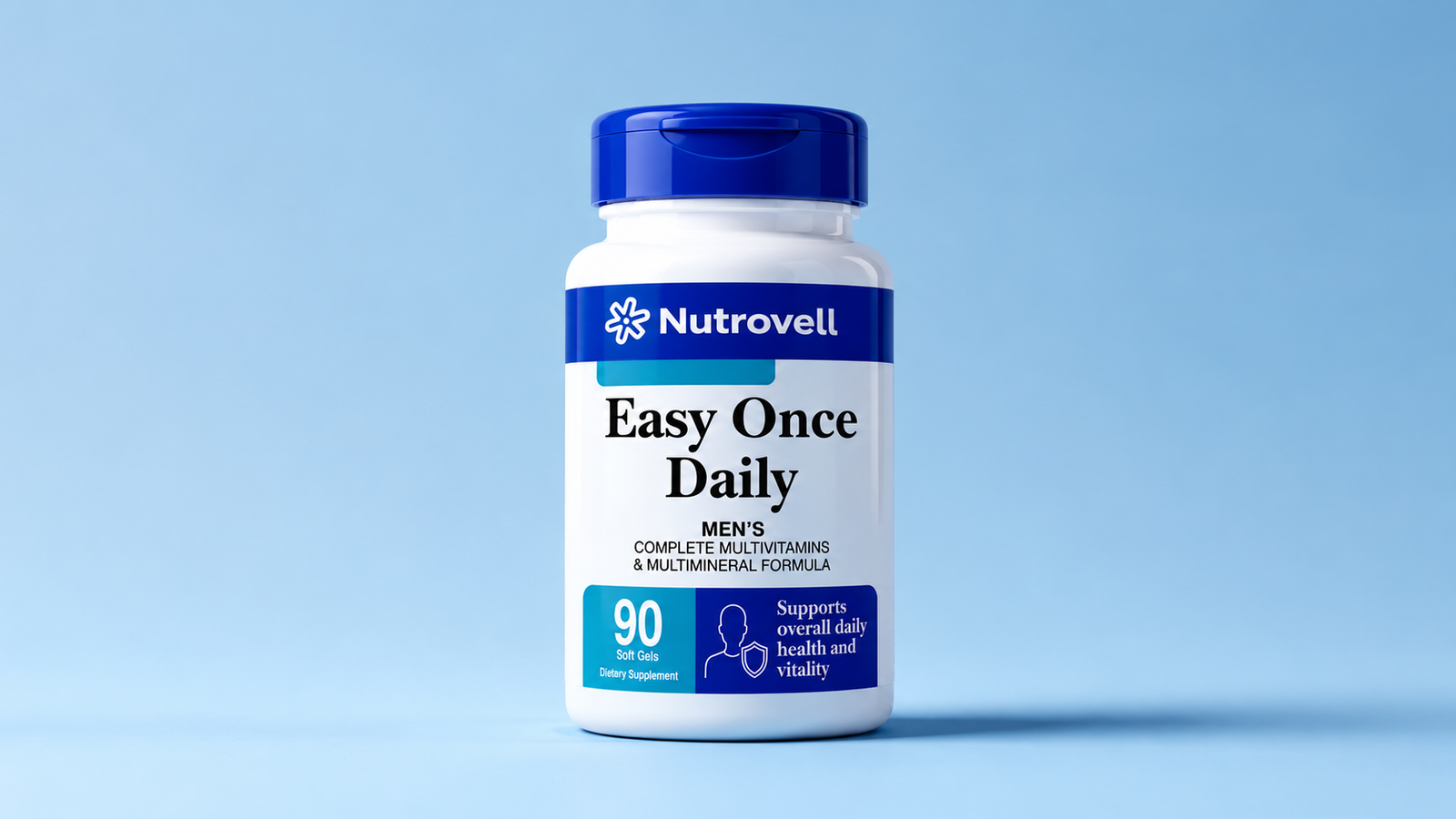
Nutrovell Easy Once Daily Men contains 27 nutrients in one daily softgel, including vitamins A, C, D3, E, B vitamins, minerals, choline, inositol, citrus bioflavonoids, rutin, boron, and CoQ10. A long list is convenient, but more ingredients do not automatically mean a better product.
Compare each amount with the Daily Value. High percentages can be reasonable for some water-soluble vitamins, but “10,000%” should not be mistaken for 10,000% more benefit. Check what is missing as carefully as what is present; no one-softgel formula can provide large amounts of every bulky mineral.
Review other products for duplication. Fortified drinks, protein powders, immune blends, and standalone vitamin D or zinc can push totals higher than intended.
Nutrients men should not take casually
This formula contains iron. Many adult men do not routinely need supplemental iron unless diet, blood loss, donation history, or laboratory results establish a reason. Iron can cause constipation and stomach upset, and excess accumulation is dangerous in hereditary hemochromatosis or repeated unnecessary use.
Vitamin A deserves attention too. Preformed vitamin A can become toxic at high chronic intakes, especially when several products overlap. High-dose vitamin E can affect bleeding. Excess zinc can interfere with copper. Vitamin K can complicate warfarin management when intake changes suddenly.
These are reasons to read and coordinate—not reasons to fear ordinary nutrients.
Food still carries the main workload
Food provides protein, fiber, essential fats, and thousands of compounds a multivitamin does not reproduce. Vegetables, fruits, legumes, whole grains, nuts, dairy or fortified alternatives, eggs, fish, and lean meats each solve different nutritional problems.
A supplement can fill numerical gaps. It cannot make low-fiber eating good for the gut, replace fish with EPA and DHA, or give muscles the training stimulus they need.
A practical way to decide
Review a typical week, not your best day. Identify foods or food groups that are consistently absent. Check your medicines and any laboratory findings. Then compare the formula with those needs.
If Easy Once Daily Men fits, take one softgel with the main meal and water as directed. Food can improve tolerance and supports absorption of fat-soluble vitamins. Do not add a second serving because the day’s meals were poor.
The bottom line
Men's multivitamins work best as gap-fillers. They can improve nutrient coverage and simplify a routine, but they do not guarantee energy, immunity, heart protection, or longevity.
Choose one because the formula matches an actual pattern in your diet—not because “men's health” on the label feels like a complete plan.
Related Product

Featured in this article
Men's Once Daily Multivitamin
Daily vitamin and mineral support for men
View ProductReferences
- National Institutes of Health, Office of Dietary Supplements. Multivitamin/mineral Supplements: Fact Sheet for Health Professionals.
- U.S. Preventive Services Task Force. Vitamin, Mineral, and Multivitamin Supplementation to Prevent Cardiovascular Disease and Cancer.
- National Institute on Aging. Vitamins and Minerals for Older Adults.
These statements have not been evaluated by the Food and Drug Administration. This product is not intended to diagnose, treat, cure, or prevent any disease.
Related Articles

Men's Multivitamin vs. Individual Supplements: Which Approach Is Better?

Lutein and Zeaxanthin Benefits for Eye Health: What the Research Shows
