

Women's Multivitamin vs. Prenatal Vitamin: What's the Difference?
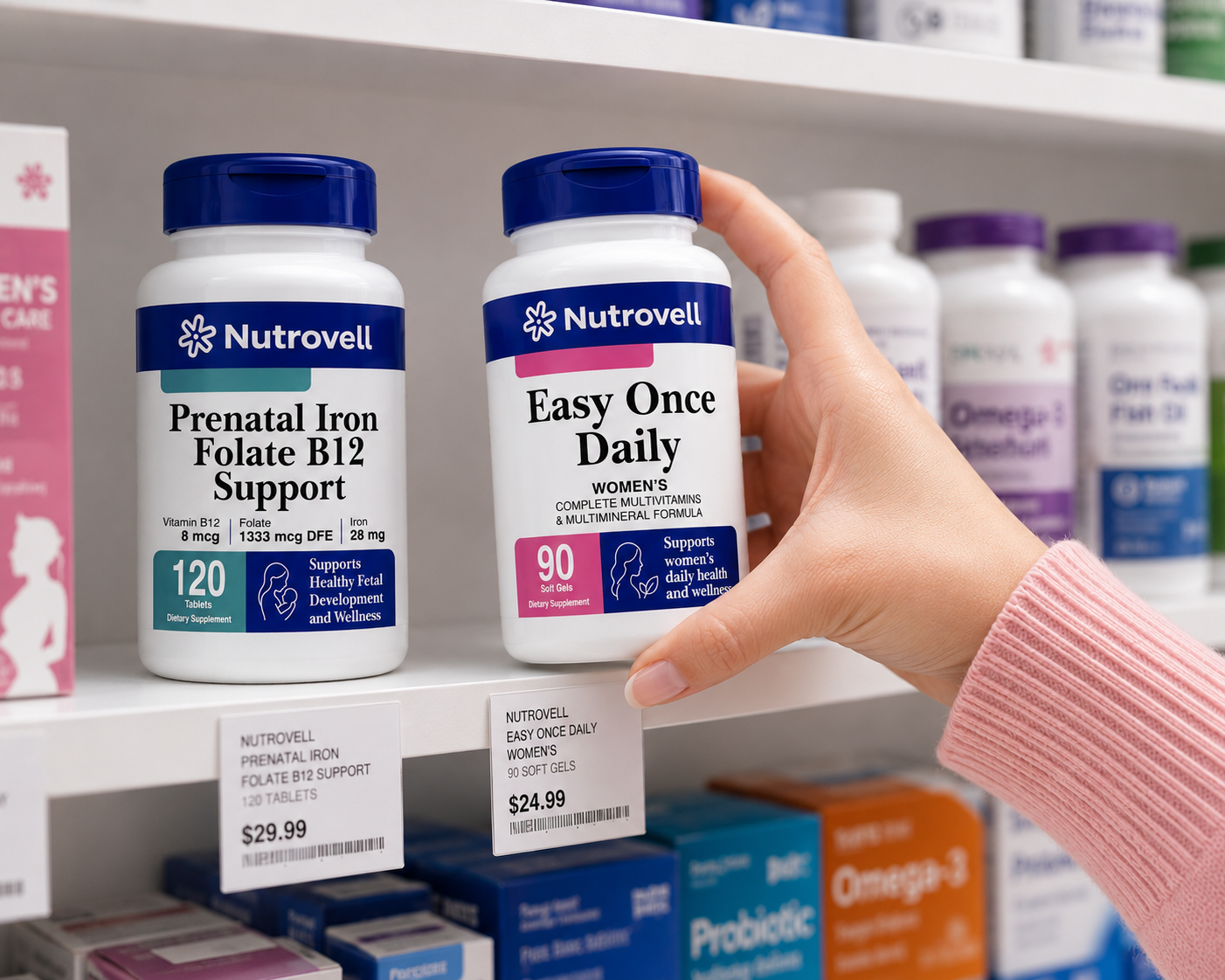
A women's multivitamin and a prenatal vitamin can look almost identical from the front. Both may contain folate, iron, vitamin D, B12, and zinc. The difference is not the color of the label; it is the nutritional problem the formula is designed to solve.
A general women's multivitamin supports routine dietary coverage across adulthood. A prenatal is built around the period before conception, pregnancy, and sometimes breastfeeding—stages when several requirements change and fetal development makes timing critical.
Folate is the difference that cannot wait
Folate is needed for DNA synthesis and cell division. Adequate folic acid before conception and in early pregnancy reduces the risk of neural tube defects. Because the neural tube closes during the first weeks, starting after a missed period may lose important time.
U.S. guidance generally recommends that people who could become pregnant consume 400 to 800 micrograms of folic acid daily, beginning at least one month before conception and continuing in early pregnancy. Higher-risk situations need a clinician-directed dose; more is not a do-it-yourself upgrade.
Some supplements use 5-MTHF or “methylfolate.” Folic acid is the form with direct evidence for neural tube defect prevention and the form used in U.S. fortification. Do not switch forms based only on an MTHFR social-media claim.
Iron requirements rise during pregnancy
Pregnancy expands blood volume and requires iron for maternal and fetal needs. Prenatal formulas commonly contain more iron than general multivitamins, although amounts vary.
Iron can cause nausea, constipation, or abdominal discomfort. Taking the product with food may improve tolerance, but calcium, coffee, and tea can reduce iron absorption. A clinician can adjust timing or form when side effects threaten consistency.
Severe fatigue, shortness of breath, palpitations, or cravings for ice deserve evaluation. Never take extra iron on top of a prenatal without a clear plan.
Iodine and choline are easy to overlook
Iodine supports thyroid hormone production and fetal brain development. Needs increase during pregnancy and breastfeeding. Choline contributes to cell membranes and nervous-system development, yet many prenatals contain little because choline is bulky.
The label should be compared with diet. Eggs, dairy, seafood, meat, soybeans, and certain beans contribute choline; iodized salt and selected foods contribute iodine. Kelp supplements are not a safe shortcut because iodine amounts can be extreme and inconsistent.
Vitamin A requires form awareness
Vitamin A is essential during pregnancy, but excessive preformed vitamin A from retinol or retinyl esters can cause birth defects. Beta-carotene does not carry the same teratogenic risk.
Review the form and total across supplements. Do not combine a prenatal with a high-dose vitamin A or liver-oil product unless a clinician has reviewed it.
Where the two Nutrovell formulas differ in purpose
Nutrovell Easy Once Daily Women provides 21 vitamins and minerals in one daily softgel for general nutritional coverage. Nutrovell Prenatal Iron, Folate & B12 Support provides 13 nutrients in one tablet with an explicit preconception and pregnancy focus.
The women's formula having more ingredients does not make it a better prenatal. The prenatal having a pregnancy-oriented label does not guarantee it matches every individual need. Compare exact amounts, pregnancy guidance, diet, and laboratory results.
When should the switch happen?
Review a prenatal before trying to conceive, ideally at a preconception visit. If pregnancy is unexpected, begin an appropriate folic-acid-containing prenatal promptly and contact an obstetric clinician.
After delivery, needs depend on breastfeeding, blood loss, diet, and recovery. Do not switch back automatically on a calendar date. A clinician can advise how long iron or prenatal-level nutrients remain appropriate.
Can both be taken together?
Usually that creates unnecessary duplication. Vitamins A, D, E, B6, folate, iron, zinc, and other nutrients can stack. Take the one formula selected for the life stage unless a healthcare professional intentionally adds a separate nutrient.
Vitamin K and minerals also interact with some medicines. Bring the complete labels—not just product names—to appointments.
The bottom line
A women's multivitamin offers broad everyday coverage. A prenatal prioritizes the nutrient needs and safety questions of conception and pregnancy. They overlap, but they are not interchangeable.
Choose the prenatal before pregnancy begins when possible, verify folic acid and iron, and let obstetric guidance—not the number of ingredients—make the final decision.
Related Product

Featured in this article
Women's Once Daily Multivitamin
Daily vitamin and mineral support for women
View ProductReferences
- U.S. Preventive Services Task Force. Folic Acid Supplementation to Prevent Neural Tube Defects.
- American College of Obstetricians and Gynecologists. Nutrition During Pregnancy.
- National Institutes of Health, Office of Dietary Supplements. Folate, Iron, Iodine, Choline, and Vitamin A Fact Sheets for Health Professionals.
These statements have not been evaluated by the Food and Drug Administration. This product is not intended to diagnose, treat, cure, or prevent any disease.
Related Articles

Vitamins for Women: Supporting Energy, Bones, and Immune Function

Best Time to Take Cranberry Supplements—and What to Do When Symptoms Start
