

Milk Thistle and Artichoke: Why Are They Combined in Liver Formulas?
Some ingredient pairings are created by habit rather than logic. Milk thistle and artichoke are not one of those random combinations—but the reason is more nuanced than “two detox herbs are better than one.”
Milk thistle is studied mainly for compounds grouped under the name silymarin. Artichoke leaf is studied for bitter compounds and polyphenols, with a long traditional association with digestion and bile flow. They approach the broad idea of liver and digestive wellness from different directions.
That makes the formula concept understandable. It does not make the combination a proven treatment.
Milk thistle brings silymarin research
Milk thistle seed extracts are typically valued for silymarin, a mixture whose best-known component is silybin. Laboratory work has explored antioxidant and anti-inflammatory pathways as well as possible effects on liver-cell membranes and fibrosis signaling.
Human research is far less decisive. Trials in various liver conditions have produced mixed results, and differences in extract standardization, dose, absorption, and study quality make broad conclusions difficult. Major evidence reviews do not support treating milk thistle as a substitute for medical care.
Still, it has one of the deeper research histories among liver-focused botanicals, which is why it so often forms the base of these formulas.
Artichoke leaf brings a different tradition
The supplement ingredient is usually an extract from the leaves of Cynara scolymus, not simply powdered artichoke hearts. Artichoke leaf contains caffeoylquinic acids and flavonoids. It has been investigated for indigestion, lipid levels, bile-related effects, and liver-enzyme changes.
Small trials and reviews in people with fatty liver or metabolic risk have reported improvements in some liver-enzyme measurements. The findings are interesting but not conclusive: studies vary in extract, length, population, and risk of bias. An improvement in ALT or AST does not prove that scarring or long-term disease outcomes improved.
Artichoke’s relationship with bile also creates an important safety distinction. Someone with a blocked bile duct, symptomatic gallstones, or an unexplained gallbladder problem should not assume that stimulating bile-related activity is helpful.
Why the pairing makes formulation sense
The two plants contribute different phytochemical profiles. A formulator may use milk thistle for its silymarin-centered antioxidant research and artichoke leaf for its digestive and bile-associated history. Combining them creates one routine for consumers interested in both traditions.
What is missing is strong clinical research on the exact pairing. Evidence for ingredient A plus evidence for ingredient B does not automatically prove A+B is superior, synergistic, or capable of treating disease. The final product’s amounts and extracts also need to resemble the materials studied before research can be applied confidently.
This is exactly why a “milk thistle versus artichoke” article would be misleading for a product that contains both. The relevant question is how their roles differ inside the same formula.
How to read a combination label
First, check whether both ingredients and their individual amounts are visible. “Liver blend: 600 mg” tells you little if the proportions are hidden. For botanicals, look for the plant part—milk thistle seed and artichoke leaf—and any extract or standardization details.
Then check the serving size. A once-daily tablet is simple; other formulas may require multiple capsules to reach the advertised amount. Compare servings, not bottle counts.
Finally, inspect the claim. “Supports normal liver function” is a limited structure-function statement. “Reverses fatty liver,” “repairs alcohol damage,” or “removes toxins” crosses into a promise the evidence does not support.
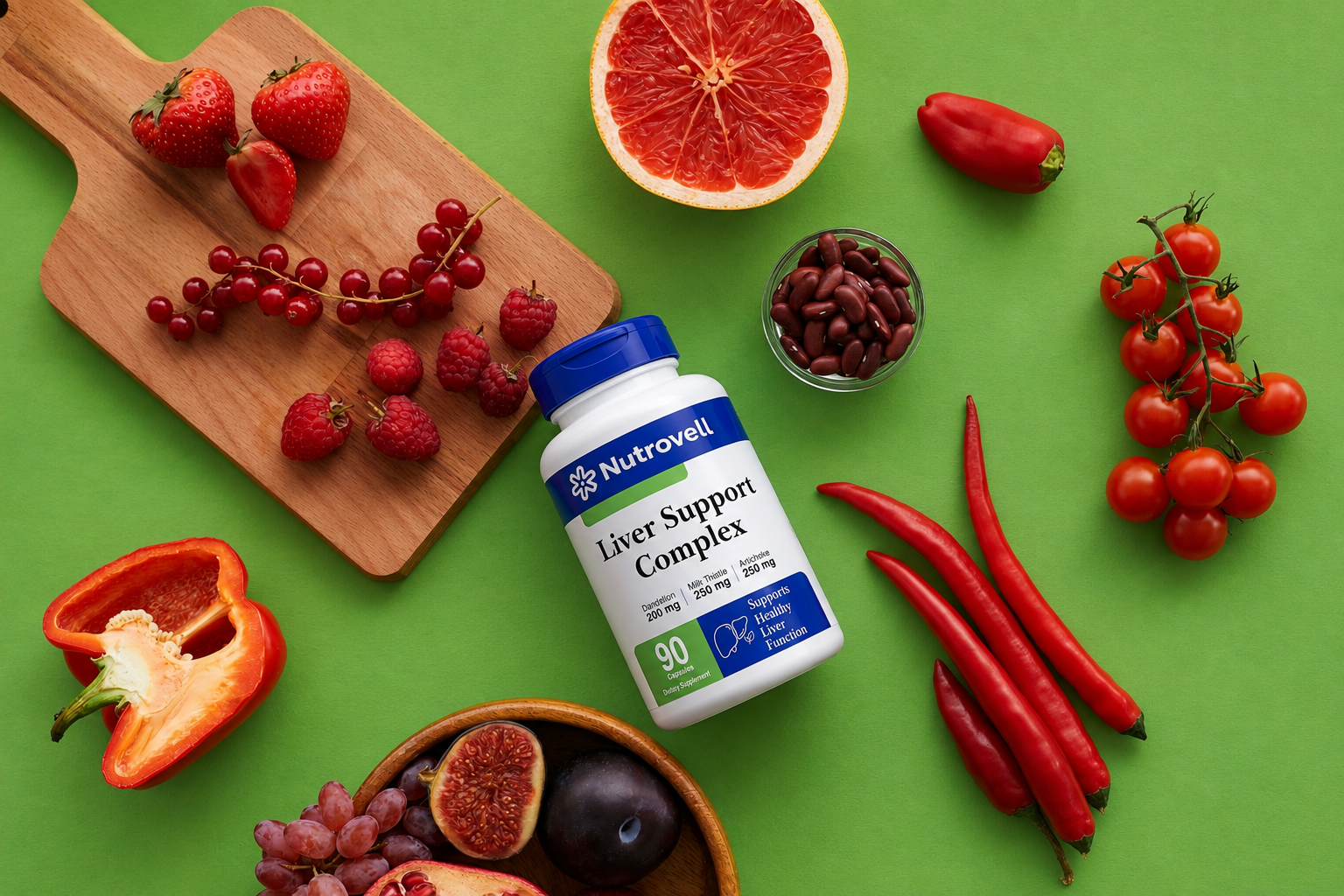
Nutrovell Liver Support Complex combines milk thistle and artichoke extract in a once-daily formula. Its most responsible role is as optional botanical support within a liver-conscious lifestyle, not as an attempt to manage abnormal test results without a clinician.
Safety is part of formula quality
Both plants belong to the Asteraceae family. People with allergies to ragweed, daisies, chrysanthemums, or related plants may be more likely to react. Digestive upset is possible.
Artichoke requires particular caution with bile-duct obstruction and certain gallbladder conditions. Milk thistle has potential interactions based on laboratory enzyme studies, even though the clinical importance of many remains uncertain. Bring the actual bottle to a pharmacist if you take prescription medicines.
Pregnancy, breastfeeding, diagnosed liver disease, and upcoming surgery all justify professional advice first. When the organ in question metabolizes many medicines and supplements, “natural” is not a free pass.
The bottom line
Milk thistle and artichoke belong in the same conversation because they are different, not because one is a cheaper copy of the other. Milk thistle contributes silymarin-focused research; artichoke leaf contributes a digestive, bile, and polyphenol-focused history.
The pairing is reasonable as a botanical formula, but clinical proof for the combination remains limited. A good label should make both ingredients understandable, keep claims modest, and tell readers when the safest choice is medical evaluation instead.
Related Product

Featured in this article
Liver Support Complex
Milk thistle, dandelion and artichoke formula
View ProductReferences
- National Center for Complementary and Integrative Health. Milk Thistle.
- National Library of Medicine. LiverTox: Milk Thistle.
- Kamel AM, et al. Therapeutic potential of artichoke in the treatment of fatty liver: a systematic review and meta-analysis. 2022.
These statements have not been evaluated by the Food and Drug Administration. This product is not intended to diagnose, treat, cure, or prevent any disease.
Related Articles

How to Support Liver Health Naturally—Without Detox Myths

Calcium Citrate vs. Calcium Carbonate: Which Form Is Better?
