Does Milk Thistle Support the Liver? What the Evidence Shows
Share

Milk thistle may be the most recognizable herb on a liver-support label. Its purple flowers have been used traditionally for centuries, and its seed extract appears in thousands of modern supplements. That history explains its reputation, but it does not answer the question most buyers care about: does it actually help the liver?
Milk thistle is biologically interesting, generally well tolerated and one of the most widely used botanicals in liver-wellness formulas. Its silymarin compounds have antioxidant properties, and some clinical studies report improvements in liver-enzyme measurements, although results vary across populations and preparations.
The most accurate way to position milk thistle is as supportive botanical nutrition—not as a cleanse, cure or replacement for medical care. In a broader formula, it can be paired with other nutrients and botanicals that support normal liver function through complementary roles.
What is silymarin?
Milk thistle (Silybum marianum) supplements usually use an extract of the plant’s fruits or seeds. The best-known extract is silymarin, a mixture of related flavonolignans. Silybin, also called silibinin, is its major component.
In laboratory and animal research, silymarin has shown antioxidant, anti-inflammatory, and cell-signaling effects. Researchers have studied whether it may influence cell membranes, oxidative stress, fibrosis pathways, and liver-cell regeneration.
These mechanisms help explain why scientists remain interested. They are not the same as evidence that a retail capsule reverses liver disease in people. Concentrations used in a laboratory, the way a compound is absorbed, and the complexity of a real disease all affect whether an idea becomes a treatment.
What human studies have found
Milk thistle has been tested in alcohol-related liver disease, viral hepatitis, metabolic dysfunction–associated steatotic liver disease, medication-related injury, and other settings. Reviews repeatedly reach a similar conclusion: studies use different extracts and doses, many are small or methodologically weak, and results conflict.
One well-designed, federally funded trial studied a high-dose standardized silymarin product in people with chronic hepatitis C who had not responded to antiviral treatment. After 24 weeks, silymarin did not improve alanine aminotransferase levels more than placebo. The trial does not answer every question about every liver condition, but it is a useful reminder that a plausible herb can fail a rigorous test.
Some meta-analyses report modest changes in ALT or AST in selected populations. Those blood enzymes can provide clues about liver-cell injury, but a small change is not automatically proof that a disease has reversed or that long-term outcomes will improve.
The National Center for Complementary and Integrative Health therefore describes the available clinical evidence as conflicting or too limited for firm conclusions.
Why milk thistle products are not all equivalent
“Milk thistle” can mean ground seed, a concentrated extract, a standardized silymarin mixture, or a formulation designed to improve absorption. These are not interchangeable research materials.
Silymarin is poorly soluble in water and has limited oral bioavailability. Studies have used a wide range of doses and delivery systems. A paper on one standardized extract cannot validate every bottle carrying a picture of the same flower.
When comparing products, look for the plant part, extract amount, serving size, and any standardization information. Avoid proprietary blends that hide individual amounts, and be wary of claims that jump from “supports antioxidant activity” to “repairs liver damage.”
Is it safe?
Milk thistle is generally well tolerated in research, with digestive symptoms such as nausea, bloating, or diarrhea among the more common complaints. Allergic reactions are possible, particularly in people sensitive to plants in the daisy family, which includes ragweed, chrysanthemums, and marigolds.
Laboratory research suggests potential effects on drug-metabolizing enzymes, although the clinical importance of many proposed interactions is uncertain. That uncertainty is a reason to show your pharmacist the actual label if you take prescription medicines—not a reason to assume either complete danger or complete safety.
Pregnant or breastfeeding people and anyone already diagnosed with liver disease should seek medical advice before using it. A liver condition changes the stakes of self-experimentation.
Where a combination product fits
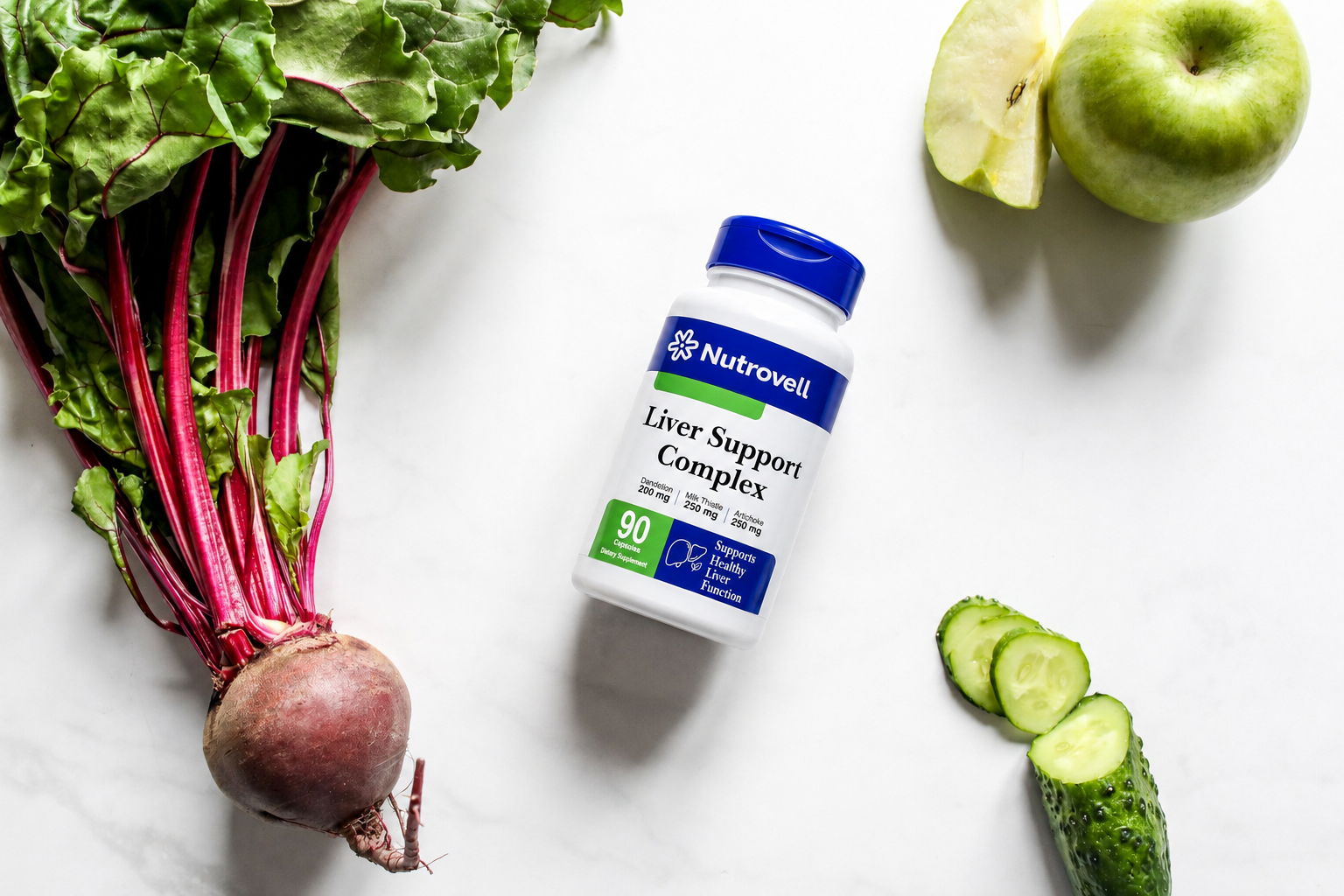
Nutrovell Liver Support Complex pairs milk thistle with artichoke extract in a once-daily tablet. The formula is best understood as botanical wellness support, not as a treatment for fatty liver disease, hepatitis, cirrhosis, or abnormal liver enzymes.
If tests are abnormal, the right response is to identify the cause. Alcohol, viral infections, metabolic disease, autoimmune conditions, medicines, and supplements themselves can all affect the liver. Adding another product before that evaluation can muddy the picture.
Seek prompt medical care for yellow skin or eyes, dark urine, pale stools, abdominal swelling, confusion, vomiting blood, or significant upper-right abdominal pain.
The bottom line
Milk thistle has a credible research history, but not a proven record as a liver-disease treatment. Its compounds show promising laboratory activity, while human trials remain mixed and difficult to compare.
Use it, if appropriate, with modest expectations and a transparent label. The most liver-supportive decision may sometimes be taking a supplement; at other times it is reducing alcohol, reviewing medicines, treating a metabolic condition, or getting a concerning symptom checked instead of trying to “detox” it away.
Related Product

Featured in this article
Liver Support Complex
Milk thistle, dandelion and artichoke formula
View ProductReferences
- National Center for Complementary and Integrative Health. Milk Thistle.
- National Library of Medicine. LiverTox: Milk Thistle.
- Kamel AM, et al. Therapeutic potential of artichoke in the treatment of fatty liver: a systematic review and meta-analysis. 2022.
These statements have not been evaluated by the Food and Drug Administration. This product is not intended to diagnose, treat, cure, or prevent any disease.
Sign up for more insights from Nutrovell
Receive the latest wellness news, practical insights, and special offers.
Related Articles

How to Support Liver Health Naturally—Without Detox Myths

Does Cranberry Help Prevent UTIs? What the Evidence Shows
