

Calcium Citrate vs. Calcium Carbonate: Which Form Is Better?
Calcium comes in a few forms, and the two you will see most are citrate and carbonate. Both are excellent sources of calcium, and the right one for you comes down to how and when you like to take it. Here is a simple guide.
Compare the elemental calcium
Carbonate is about 40% calcium by weight, so it packs more calcium into a smaller tablet, while citrate is around 21%. What matters is the Calcium line on the Supplement Facts panel, which tells you how much calcium you actually get per serving.
Carbonate: take it with food
Calcium carbonate absorbs best with a meal, when stomach acid helps it dissolve. If you take your supplement at breakfast or dinner, carbonate is an efficient, economical choice.
Citrate: flexible any time
Calcium citrate depends less on stomach acid, so it can be taken with or without food. That makes it handy for people who take acid-reducing medication or simply want flexibility.
Both are gentle and effective
Taken correctly, both forms reliably raise your calcium intake and support bone health. Citrate is often a little easier on digestion, while carbonate with food suits most people well, and pairing either with vitamin D3 helps your body absorb it.
How Nutrovell fits
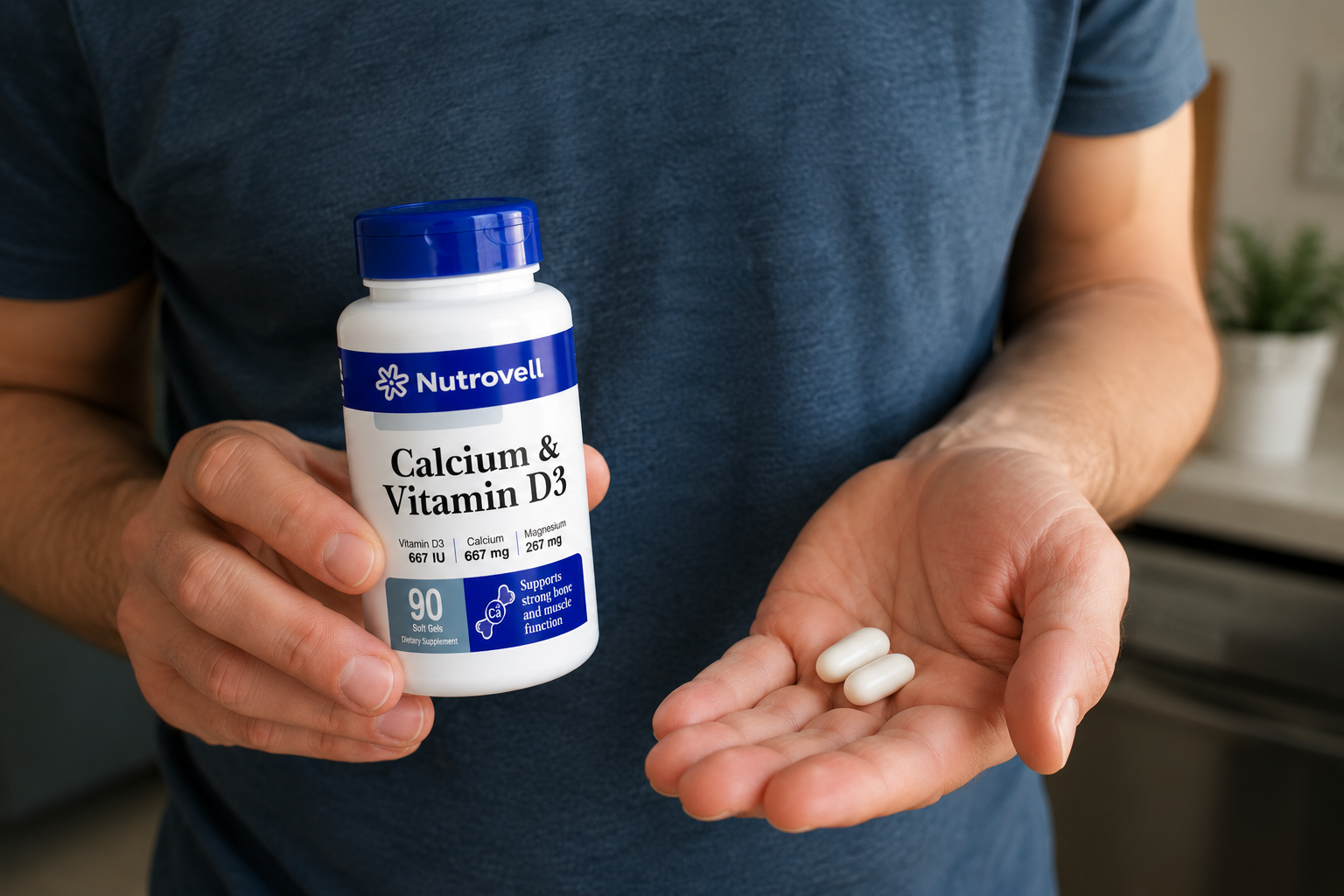
Nutrovell Calcium with Vitamin D3 pairs calcium with the D3 your body needs to absorb it, plus magnesium and zinc, in one easy daily softgel, so the absorption teamwork is built right in.
Good to know
Calcium can reduce absorption of levothyroxine, iron, some antibiotics and bone medications, so space those a few hours apart. If you have kidney disease or a history of kidney stones, check with your doctor first.
The bottom line
Citrate is flexible around meals; carbonate delivers more calcium per tablet with food. Both work beautifully, so choose what fits your routine, and Nutrovell makes it simple by pairing calcium with the D3 that helps you use it.
Related Product

Featured in this article
Calcium, Magnesium & Zinc with Vitamin D3
Bone, muscle and mineral support
View ProductReferences
- National Institutes of Health, Office of Dietary Supplements. Calcium Fact Sheet for Health Professionals.
- National Institutes of Health, Office of Dietary Supplements. Vitamin D Fact Sheet for Health Professionals.
- National Institute of Arthritis and Musculoskeletal and Skin Diseases. Bone Health and Osteoporosis.
These statements have not been evaluated by the Food and Drug Administration. This product is not intended to diagnose, treat, cure, or prevent any disease.
Related Articles

Calcium With Vitamin D3: Benefits for Bones, Muscles, and Healthy Aging

Best Time to Take Calcium, Magnesium, Zinc, and Vitamin D3 Together
